Brilliant scientist but...

'I'm Not Afraid': What Stephen Hawking Said About God, His Atheism And His Own Death

Stephen Hawking said during an interview with El Mundo in 2014: "Before we understand science, it is natural to believe that God created the universe.

384 Shares
EMAIL
PRINT
COMMENTS
'I'm Not Afraid': What Stephen Hawking Said About God, His Atheism And His Own Death
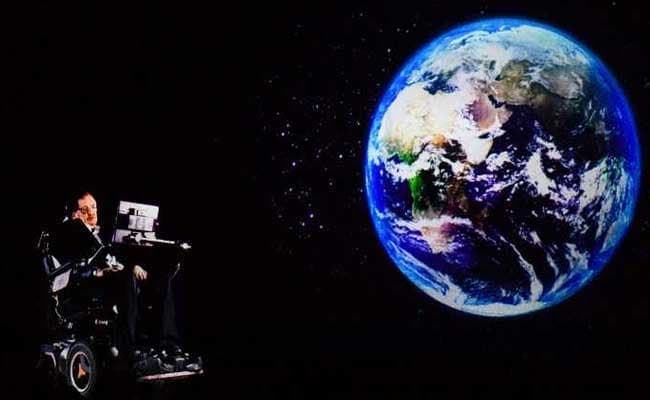
Stephen Hawking died at his home in Cambridge in England on 14th March.
British theoretical physicist Stephen Hawking schmoozed with popes during his lifetime, even though he was an avowed atheist. The famous scientist,who died Wednesday in England at 76, was often asked to explain his views on faith and God. During interviews, he explained his belief that there was no need for a creator.

He said during an interview with El Mundo in 2014: "Before we understand science, it is natural to believe that God created the universe. But now science offers a more convincing explanation. What I meant by 'we would know the mind of God' is, we would know everything that God would know, if there were a God, which there isn't. I'm an atheist."

That followed comments made to Reuters in 2007 in which Hawking, who had lived with amyotrophic lateral sclerosis (also known as Lou Gehrig's disease or ALS) since 1963, described himself as "not religious in the normal sense."

"I believe the universe is governed by the laws of science," he said. "The laws may have been decreed by God, but God does not intervene to break the laws."

Because of his involvement in the Pontifical Academy of Sciences, which fosters "interaction between faith and reason and encouraging dialogue between science and spiritual, cultural, philosophical and religious values," he visited the Vatican over the years. Hawking gave a talk on "The Origin of the Universe" during the group's 2016 conference at the Vatican.

During those visits, he met with religious leaders, includingPope Francis andPope Benedict XVI. In his comments to the Academy in 2010, Benedict XVI seemed to refer to Hawking,saying, "Scientists do not create the world; they learn about it and attempt to imitate it."

In Hawking's writings about the universe's origin, he and co-author Leonard Mlodinow posited in the 2010 book, "The Grand Design," that the big bang was inevitable.

"Because there is a law such as gravity, the universe can and will create itself from nothing," the book states. "Spontaneous creation is the reason there is something rather than nothing, why the universe exists, why we exist. It is not necessary to invoke God to light the blue touch paper and set the universe going."

In discussing the book, he toldABC News: "One can't prove that God doesn't exist. But science makes God unnecessary. . . . The laws of physics can explain the universe without the need for a creator."

Hawking's earlier best-selling cosmology book, "A Brief History of Time," also discussed black holes and the big bang. The 1988 book offered his "theory of everything" that understanding the universe offers a glimpse of "the mind of God."

He also explained throughout his life his thoughts on a possible afterlife,saying, "I believe the simplest explanation is, there is no God. No one created the universe and no one directs our fate. This leads me to a profound realization that there probably is no heaven and no afterlife either. We have this one life to appreciate the grand design of the universe and for that, I am extremely grateful."

In 2011, his comments to the Guardian explained his stance further: "There is no heaven or afterlife for broken down computers; that is a fairy story for people afraid of the dark."


Comments
Hawking, who was born Jan. 8, 1942, and lived with his disease for much longer than expected, also said during the interview: "I'm not afraid of death, but I'm in no hurry to die. I have so much I want to do first."

(This story has not been edited by NDTV staff and is auto-generated from a syndicated feed.)


 Brilliant scientist but LACKS IN common sense

British physicist, cosmologist, astronomer, theoretician and writer.


Common sense - Wikipedia

https://en.wikipedia.org/wiki/Common_sense


Common sense is sound practical judgment concerning everyday matters, or a basic ability to perceive, understand, and judge that is shared by ("common to") nearly all people.[1] The first type of common sense, good sense, can be described as "the knack for seeing things as they are, and doing things as they ought to be done."
Related image

 ......................................................................
LACKS IN-The second type is sometimes described as folk wisdom, "signifying unreflective knowledge not reliant on specialized training or deliberative thought." The two types are intertwined, as the person who has common sense is in touch with common-sense ideas, which emerge from the lived experiences of those commonsensical enough to perceive them.[2]


Related image
John Lennox
Mathematician
John Carson Lennox is a Northern Irish mathematician specialising in group theory, philosopher of science and Christian apologist. Wikipedia
Born7 November 1943 (age 74), Northern Ireland, United Kingdom
Doctoral studentsHoward Smith

Professor John Lennox | God DOES exist - YouTube


https://www.youtube.com/watch?v=otrqzITuSqE
Dec 21, 2012 - Uploaded by OxfordUnion
Professor John Lennox gives his argument for the existence of God. SUBSCRIBE for more speakers ▻ http://is ...
 Image result for Stephen Hawking at pearly gate


Image result for Stephen Hawking at pearly gate


what next after ohmibod-waiting for ohmec***K and that will be the end of all paid s**

OhMiBod Brand - LoveLife Toys

www.lovelifetoys.com/OhMiBod-Brand
Masks · Sensory · Restraints · Arousal & Libido · For Him · For Her · Rear Gear · Toys · Lubes · Books · Featured Brands · Lovelife · OhMiBod · Sliquid · Aneros · Bijoux Indiscrets · Bristols 6 · BlueMotion · Club Vibe · Rings & Things · Kissable Fun · Books & Games · Sexy Wearables · Acsexories · Personal Care · Kits · Steals & ...

OhMiBod - Wikipedia

https://en.wikipedia.org/wiki/OhMiBod
OhMiBod is an American company which manufactures sex toys. It is based in New Hampshire, United States. Its name is used as a collective reference to the whole family of remote controlled and/or musically-powered, today (2017) chiefly Bluetooth-driven, vibrating sex toys. The device originally translated an electronic ...
Products‎: ‎Esca, Lovelife
Founder‎: ‎Suki Dunham; Brian Dunham
=============================================

Want to have better sex? Sex in augmented reality is going to change ...

https://qz.com/.../want-to-have-better-sex-sex-in-augmented-reality-is-going-to-chang...
Jun 20, 2017 - The future of Snapchat filters could allow you to have virtual sex with whoever you want ... As soon as we overcome the turn-off of holding a bulky piece of glass and rare-earth metals between you and your lover, augmented-reality sex could become the next big kink thing. Augmented reality (AR) uses a ...

How Virtual Reality Will Change Sex and Dating by 2020 (NSFW)

https://www.makeuseof.com › Future Tech
Jul 31, 2015 - How Virtual Reality Will Change Sex and Dating by 2020 (NSFW) ... Virtual Reality is rapidly improving, and it's going to transform the most intimate areas of life. .... My colleague, Ryan, has written about the emerging technology of humanoid sex robots, and how they might change the future of sex. I tend to ...

Rise of the ROBOSEXUALS: Humans will have virtual reality sex by ...

www.dailymail.co.uk/.../Rise-ROBOSEXUALS-Humans-virtual-reality-sex-2030-droi...
Oct 5, 2015 - Rise of the ROBOSEXUALS: Humans will have virtual reality sex by 2030 and droid trysts will be more popular than human love-making in 2050, expert ... A report, authored by Dr Pearson, looks at how sex will evolve and predicts love and sex will become increasingly separate in the future, as robots take ...

The Future of Virtual Reality's & Sex #TOA17 - YouTube

https://www.youtube.com/watch?v=BvZUV8wJ2PQ
Jul 18, 2017 - Join Bryony Cole, host of the leading sextech podcast Future of Sex, for a live podcast discussion exploring how virtual reality will impact our most intimate lives. Bryony is joined by Xavi Clos, Head of Production at BaDoink VR. The company recently released the first sex-ed programs in VR: Virtual ...

What's the future of virtual sex? | Stuff You Should Know

https://www.stuffyoushouldknow.com/podcasts/virtual-sex.htm
Feb 2, 2017 - In the not too distant future, sex may not involve being in the same room as your partner. In fact, your partner may not even have to be a human. We're talking virtual sex here. Couple VR with high tech, smart sex toys and intercourse as we know it may be a thing of the past. Except not really.

Robots, VR... The Future Of Sex Is Virtual | VRROOM

https://www.vrroom.buzz/vr-news/trends/robots-vr-future-sex-virtual
Dec 18, 2016 - Tillie Demetriou Investigates: Sex in the digital age. Sex. It needs no introduction and statistics show that globally we spent approximately £15b a year on the adult entertainment industry alone. But with the emergence of robots and virtual reality porn, the need for a human partner is becoming less and less.

Love, Virtually: The Future of Sex & Dating in Virtual Reality

www.freshmana.net/love-virtually-the-future-of-sex-dating-in-virtual-reality/
Nov 6, 2016 - Among the shiny new toys promising a bright future in virtual reality was a lot of talk about social connection; not surprising considering the company is owned by Facebook. The executives at Oculus were vehement about their goal of creating a VR environment and devices where people could connect and ...

The Future of Sex: How Intimacy is Transforming - Futurism

https://futurism.com/the-future-of-sex-how-intimacy-is-transforming/
Jan 11, 2017 - From virtual fantasies to human augmentation, the Future of Sex looks into the five major fields driving the next innovations in intimacy. ... While the field is still in the fledging stage, in the coming decades long-distance sex will become more appealing, realistic, and emotionally intense. Innovation is ...

Einstein made his share of errors. Here are three of the biggest{{ NBCNews.com 24m ago}}

Einstein made his share of errors. Here are three of the biggest

Lucky for us, he was a persistent sort.

by Dan Falk /
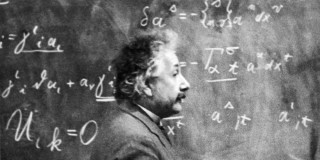
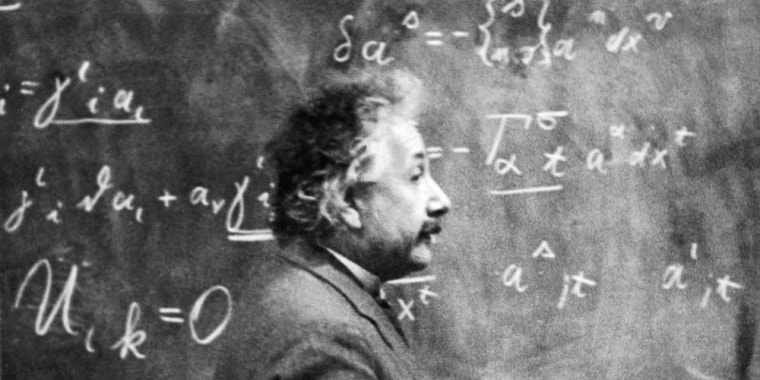
Physicist Albert Einstein stands beside a blackboard with mathematical calculations written across it in 1921.Hulton Archive via Getty Images
Get the Mach newsletter.
Even people who know little about Albert Einstein’s work know he was brilliant — so clever that his name is synonymous with genius. Of course, the mind that gave us the theory of general relativity, the 1915 masterwork that sealed Einstein’s scientific reputation, was human. And so Einstein made his share of mistakes.
Here’s a close look at three times the great physicist, born on Pi Day (March 14) 139 years ago today, got things wrong.

1. Starlight bends — but how much?

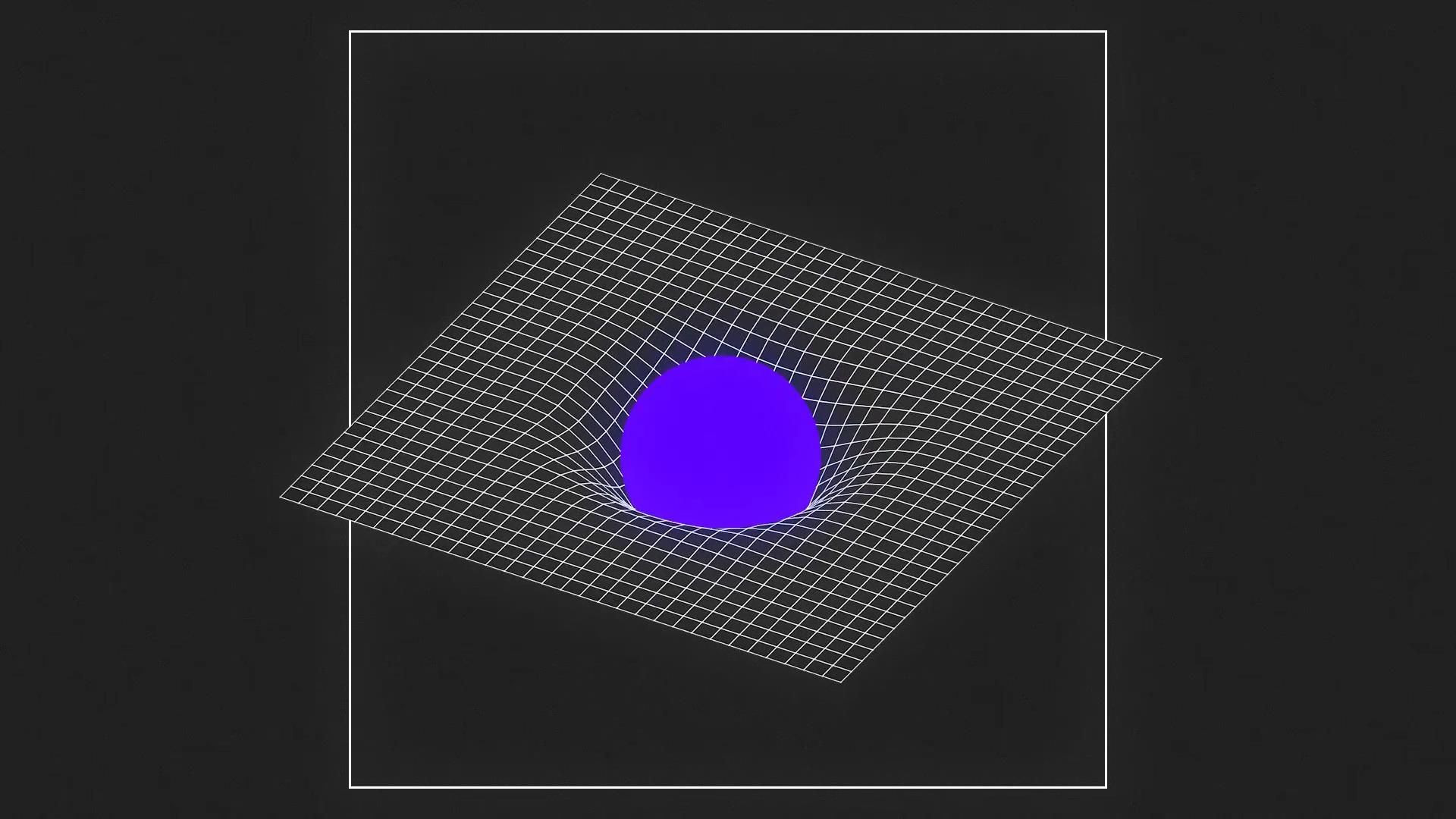
Place a heavy ball on a sheet of rubber, and the ball's weight distorts the sheet. Einstein realized that something similar happens in space: Gravity from stars and other massive objects bends the paths of nearby light rays. If a ray of light from a distant star passes the sun on its way to Earth, for example, it should bend enough to cause a tiny shift in the observed position of the star.
It’s not easy to test this idea. For one thing, the shift is truly minute. And the blinding light of the sun can make distant stars hard to see. But astronomers realized that even a tiny shift ought to be visible during a total solar eclipse, when light from the sun is blotted out.
Einstein performed a series of calculations to determine the size of the predicted shift but initially muffed the effort, arriving at a number that was half the correct value.
Had the astronomers managed to test this number in their initial eclipse-viewing efforts, their observations wouldn’t have matched his prediction. But their attempts were stymied by weather in 1912 and by war in 1914. By the time they made the necessary observation, in the spring of 1919, Einstein had corrected his blunder — and astronomers saw exactly the shift that he had predicted.

2. Gravitational waves don’t exist — or do they?

The discovery of gravitational waves in 2016 was hailed as a triumph of Einstein’s theory, the confirmation of a prediction made in 1916. But as you might suspect, there’s more to the story.
Soon after developing general relativity, Einstein began to wonder if there might be a wave associated with gravity as there is with electromagnetism. (Electromagnetic waves include visible light as well as radio waves, microwaves, and X-rays.)
Einstein moved on to other problems. When he returned to it two decades later, he concluded that gravitational waves waves couldn’t exist because they’d create “singularities” — regions in which space and time are stretched to infinity.
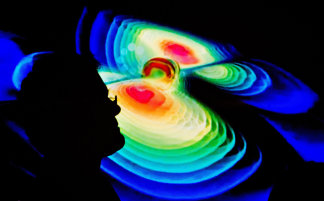
 A scientist is silhouetted against a visualization of gravitational waves during a press conference by the Max Planck Institute for Gravitational Physics (Albert Einstein Institute) at the Leibniz University in Hanover, Germany, Thursday, Feb. 11, 2016. U JULIAN STRATENSCHULTE / EPA
But Einstein had goofed because of the mathematical coordinate system he used to tackle the problem. It's a bit like what happens with the latitude and longitude used to track positions on Earth, says University of Arkansas physicist Daniel Kennefick. It works fine in most places on the planet. But as one gets close to the poles, lines of longitude converge and the system breaks down.
"It doesn't mean the North Pole doesn't exist — it's a real place — it's just that the coordinate system breaks down," Kennefick says.
Einstein hadn't shown that gravitational waves couldn't exist, only that they couldn't exist in the mathematical system that he'd used.
When Einstein submitted a paper arguing that gravitational waves don't exist to Physical Review, the journal’s editor sent it back to for revisions. Outraged, Einstein withdrew it. By the time he submitted it to another journal, he had corrected his mistake. The revised paper argued that gravitational waves do, in fact, exist.

3. Einstein and the expanding universe

Einstein was uncomfortable with some of relativity’s implications, including one of the biggest — that the universe isn’t a static thing but an entity that must expand or contract. This was unthinkable to Einstein, who believed the universe existed in a “steady state.”
So Einstein added a fudge factor to his equations, a kind of energy associated with empty space. This cosmological constant allowed for a stable universe. But sure enough, astronomers in the 1920s confirmed that the universe was expanding. Einstein later called the cosmological constant the “greatest blunder” of his career.
Einstein's resistance to the idea of an expanding universe makes sense in light of his classical education, says Marcia Bartusiak, a science journalism professor at MIT and the author of several books on the history of physics. His schooling took place in the 1880s and 1890s, when the prevailing wisdom — based on physics going back to the work of Isaac Newton — was that the universe was static. An expanding cosmos simply "didn't fit with his view of how the universe acted," she says. But when astronomers showed Einstein the data, he came around.
“He listened to the evidence, from [astronomer Edwin] Hubble,” Bartusiak says. "He admitted his error.”

Related

(In the late 1990s, astronomers discovered that the universe is not only expanding but expanding at an accelerating rate. Now they wonder if something like Einstein’s cosmological constant is playing a role — which means his earlier “mistake” may in fact have been an idea ahead of its time.)
Einstein’s errors take nothing away from his extraordinary achievements. Indeed, they would hardly be noteworthy if they involved a lesser thinker. And the fact that he didn’t let himself be derailed by his missteps — that he changed course in light of new evidence — is a hallmark of his brilliance, says historian Jürgen Renn.
“He persisted, in spite of incredible obstacles, in spite of the errors,” says Renn, director of the Max Planck Institute for the History of Science in Berlin. “And in the end, he came up with one of the most revolutionary theories in all of physics.”
FOLLOW NBC NEWS MACH ON TWITTER, FACEBOOK, AND INSTAGRAM.
MORE FROM mach