Now, a device to communicate with dolphins

Dolphins live in a world of sound far beyond our own. They can distinguish very small differences in the pitches of sound waves and can hear, and generate low-frequency sounds below 20 khz, as well as high-frequency sounds of over 150 khz, which is well beyond the range of human hearing.

WASHINGTON: Scientists have developed a new dolphin speaker device which they say could help one talk with these remarkably intelligent mammals.

Dolphins live in a world of sound far beyond our own. They can distinguish very small differences in the pitches of sound waves and can hear, and generate low-frequency sounds below 20 khz, as well as high-frequency sounds of over 150 khz, which is well beyond the range of human hearing.

In addition, they produce special sounds to communicate with others and to scan their surroundings and prey in the dark sea (called echolocation).

Acoustic research of dolphins to date has mostly focused on recording their sounds and measuring their hearing skills. Few audio playback experiments have been attempted, since it's difficult to find speakers that can project from a wide range of low to high frequencies like dolphins do.

Now, scientists in Japan have devised a prototype dolphin speaker that can project the full range of all of the sounds the mammals make -- from those used in communication to echolocation clicks.

To develop the device, the researchers used piezoelectric components that convert electricity into physical movement and vice versa. These components were capable of broadcasting both high-frequency and low-frequency sounds. They precisely tailored the sizes of these components and the acrylic disk to create an extremely broad range of sounds.

"I am happy if we can communicate with dolphins using the dolphin speaker," lead researcher Yuka Mishima of the Tokyo University of Marine Science and Technology told LiveScience.

The dolphin speaker, which was developed just a few weeks ago, has not been tested yet. Mishima and colleagues plan to work with such scientists using the new speaker.

The idea is to broadcast specific series of vocalisations and then record the responses; over time, this back and forth could someday both reveal what dolphins are "saying" and allow possible human-dolphin communication, the researchers detailed at Acoustical Society of America meeting in Hong Kong.

"We know very little about how dolphins classify their own sounds -- we need more perceptual studies to find out, and this equipment may help us do that," said Heidi Harley of New College of Florida in Sarasota who wasn't involved in the new research.

As to whether or not this invention could one day result in a human-dolphin translator device, "I think we have a lot to learn about dolphin vocalisations -- their productions are complex," Harley said.

"There is still a lot of basic perceptual and acoustic analysis that needs to be done before we can make strong claims about how dolphins are using their vocalisations," he added.

No More Needles: MIT Develops High-Powered Liquid Injection Device

Screenshot of a video simulation showing MIT's new liquid jet injection process, with a jet of liquid breaching skin, entering the bloodstream and dispersing medicine.Screenshot of a video simulation showing MIT's new liquid jet injection process, with a jet of liquid breaching skin, entering the bloodstream and dispersing medicine.
16277

If you’re queasy about getting shots because you don’t like needles, MIT scientists have developed a new drug injection method just for you.

Instead of pricking the skin, a prototype handheld injector device instead delivers medicine as an extremely thin, exceptionally high-powered jet of liquid, which has enough force to breach skin, yet does so with such precision and speed that it doesn’t cause pain or discomfort, nor does it leave behind a noticeable hole, according to the MIT researchers who created it.

“Skin is flexible and because the hole we produce is so small the elasticity of the skin ‘closes up’ the hole,” said Ian Hunter, an MIT professor of mechanical engineering that led the research behind the prototype injector, in an email to TPM.

“Moreover, the skin repairs the hole in a day or so,” he added.

In a video demonstration of the new injection method and prototype device posted online Thursday, Hunter compared the sensation of getting the drugs injected via a jet to getting bitten by a mosquito — barely noticeable for most people.

To be fair, though, Hunter and his colleagues haven’t yet begun human trials of their new prototype device. So far they’ve just tested it on gel, animal tissues and several living animal subjects, including sheep.

“In sheep it appeared that the sheep was not even aware that it was being injected,” Hunter told TPM. “Human testing is a high priority and should start in the near future.”

The method developed by Hunter and his colleagues relies on a device called a Lorentz force actuator. This consists of a strong magnet and an electrode, in this case, copper wire coiled around the magnet, attached to a piston. When a current is sent through the wire, it interacts with the magnetic field, causing the piston to fire and expel the liquid at an incredible velocity.

Illustration showing the inner-workings of MIT’s new liquid jet injector, courtesy MIT BioInstrumentation Lab.

“We find that its is a combination of both force (or pressure) and velocity of the jet which determines the effectiveness of the penetration and the depth of the delivery,” Hunter told TPM. “Our pressures are typically at least 50 times atmospheric pressure and our velocities are typically well over 1/10th the speed of sound (in air) and sometimes as high as the speed of sound.”

In fact, the prototype device works so well that it has even been able inject solids — in the form of powder and tiny beads — into nonhuman test subjects in laboratory trials. What happens is that the powder and beads are shot at such high velocity, they take on the properties of liquids. As Hunter noted in an MIT news article, this could be helpful in cases where some drugs can only be stored for long periods of times as powder, with the liquid forms requiring refrigeration.

Hunter said he has his colleagues at MIT built their prototype device in six months.

“We now build every thing from scratch,” Hunter told TPM. “Much of the scientific apparatus required to measure and quantify the injections did not exist so we had to design and build these.”

The injector can be used for everything from small doses of insulin required by diabetics to larger doses of other drugs, including liquids as viscous as honey.

The team was able to overcome physical volume limitations of storing enough medicine in one actual handheld device itself by building a prototype with two Lorentz force actuators. As the first actuator is running out of liquid, the second is hooked up to a reservoir of medicine and then “takes over” the role of the first actuator, pumping drugs through the tiny hole. While that one is injecting the medicine, the first actuator is drawing upon the reservoir of medicine, and so on.

“We can produce an almost continuous flow and can deliver large volumes (or equivalently for use during emergences where a very large number of people must be inoculated or for use on farms where a large number of animals must be inoculated),” Hunter told TPM.

As for the cost compared to the plain old needles, Hunter acknowledged that was still one area were more work was being done.

“We are trying our best to keep the costs low,” Hunter wrote. “A needle and plastic syringe is a very low cost combination. But when you step back and consider the human cost of needle-stick injuries and other misuse of needles and syringes we feel that our technology becomes cost effective.”

Hunter and several colleagues from other universities first laid out the groundwork for the new method in a paper in 2006. Their successful prototype injector is explained in a new paper published online in the journal Medical Engineering & Physics.

Engineering, Health, MIT, Mechanical Engineering, Medicine
Carl Franzen

Carl Franzen is TPM Idea Lab's tech reporter. He used to work for The Daily, AOL and The Atlantic Wire (though not simultaneously, thankfully). He's never met a button that didn't need to be pressed. He can be reached at carl@talkingpointsmemo.com.

No more needles: new device images blood flow non-invasively

No more needles: new device images blood flow non-invasively

May 23, 2012
Blood Flow Imaging 2

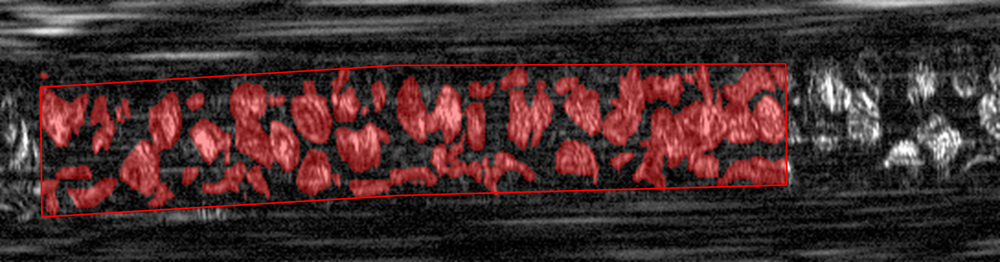
An in vivo image shows red blood cells within a microvessel. The area occupied by red blood cells in the images can be used to calculate the percent volume of red blood cells, a key measurement for many medical diagnoses. (Credit: Golan et al./Biomedical Optics Express)

Good news if you hate being jabbed with needles and then waiting around for the test results — which is everybody. Israel Institute of Technology (Technion) researchers have developed a device that provides high-resolution images of red and white blood cells in vivo and does an instant diagnosis — simply by shining a light on the skin.

By eliminating the long wait time for blood test results, the new microscope might help spotlight warning signs, like high white blood cell count, before a patient develops severe medical problems. The portability of the device could also enable doctors in rural areas without easy access to medical labs to screen large populations for common blood disorders.

As a test, the researchers imaged the blood flowing through a vessel in the lower lip of a volunteer. They successfully measured the average diameter of the red and white blood cells and also calculated the percent volume of the different cell types, a key measurement for many medical diagnoses.

How it works

Spectrally encoded confocal microscopy system: multiple colors of light are projected onto the tissue; a CCD reads out the reflected image a line at a time, and the images are sent to a computer to create a composite 2D image. (Credit: Golan et al./Biomedical Optics Express)

The device relies on a technique called spectrally encoded confocal microscopy (SECM), which creates images by splitting a light beam into a spectrum — a line from red to violet. To scan blood cells in motion, a compact probe is pressed against the skin of a patient and the rainbow-like line of light is directed across a blood vessel near the surface of the skin.

The blood cells scatter light, which is collected and analyzed. The color of the scattered light carries spatial information, and computer programs interpret the signal to create images of the blood cells at subcellular resolution (.7 micron lateral. 1.5 micron axial).

Currently, other blood-scanning systems with similar resolution exist, but they are far less practical, relying on bulky equipment or potentially harmful fluorescent dyes that must be injected into the bloodstream.

“An important feature of the technique is its reliance on reflected light from the flowing cells to form their images, thus avoiding the use of fluorescent dyes that could be toxic,” says Lior Golan, a graduate student in the Technion biomedical engineering department. “Since the blood cells are in constant motion, their appearance is distinctively different from the static tissue surrounding them.”

The researchers are working on a second-generation system with higher penetration depth. It might expand the range of possible imaging sites beyond the inside lip, which was selected as a test site since it it’s rich in blood vessels, has no pigment to block light, and doesn’t lose blood in trauma patients.

“Currently, the probe is a bench-top laboratory version about the size of a small shoebox,” says Golan. “We hope to have a thumb-size prototype within the next year.”