
What's on the surface of a black hole?
What's on the surface of a black hole?
by Pam Frost Gorder for OSU News
Columbus OH (SPX) Jun 17, 2015
 Simulated view of a black hole by Alain Riazuelo of the French National Research Agency. |
Are black holes the ruthless killers we've made them out to be? Samir
Mathur says no. According to the professor of physics at The Ohio State
University, the recently proposed idea that black holes have "firewalls"
that destroy all they touch has a loophole.
In a paper posted online to the arXiv preprint server [arXiv:1506.04342], Mathur takes issue with the firewall theory, and proves mathematically that black holes are not necessarily arbiters of doom. In fact, he says the world could be captured by a black hole, and we wouldn't even notice.
More than a decade ago, Mathur used the principles of string theory to show that black holes are actually tangled-up balls of cosmic strings. His "fuzzball theory" helped resolve certain contradictions in how physicists think of black holes.
But when a group of researchers recently tried to build on Mathur's theory, they concluded that the surface of the fuzzball was actually a firewall.
According to the firewall theory, the surface of the fuzzball is deadly. In fact, the idea is called the firewall theory because it suggests that a very literal fiery death awaits anything that touches it.
Mathur and his team have been expanding on their fuzzball theory, too, and they've come to a completely different conclusion. They see black holes not as killers, but rather as benign copy machines of a sort.
They believe that when material touches the surface of a black hole, it becomes a hologram, a near-perfect copy of itself that continues to exist just as before.
"Near-perfect" is the point of contention. There is a hypothesis in physics called complementarity, which was first proposed by Stanford University physicist Leonard Susskind in 1993. Complementarity requires that any such hologram created by a black hole be a perfect copy of the original.
Mathematically, physicists on both sides of this new fuzzball-firewall debate have concluded that strict complementarity is not possible; That is to say, a perfect hologram can't form on the surface of a black hole.
Mathur and his colleagues are comfortable with the idea, because they have since developed a modified model of complementarity, in which they assume that an imperfect hologram forms. That work was done with former Ohio State postdoctoral researcher David Turton, who is now at the Institute of Theoretical Physics at the CEA-Saclay research center in France.
Proponents of the firewall theory take an all-or-nothing approach to complementarity. Without perfection, they say, there can only be fiery death.
With his latest paper, Mathur counters that he and his colleagues have now proven mathematically that modified complementarity is possible.
It's not that the firewall proponents made some kind of math error, he added. The two sides based their calculations on different assumptions, so they got different answers. One group rejects the idea of imperfection in this particular case, and the other does not.
Imperfection is common topic in cosmology. Physicist Stephen Hawking has famously said that the universe was imperfect from the very first moments of its existence. Without an imperfect scattering of the material created in the Big Bang, gravity would not have been able to draw together the atoms that make up galaxies, stars, the planets--and us.
This new dispute about firewalls and fuzzballs hinges on whether physicists can accept that black holes are imperfect, just like the rest of the universe.
"There's no such thing as a perfect black hole, because every black hole is different," Mathur explained.
His comment refers to the resolution of the "information paradox," a long-running physics debate in which Hawking eventually conceded that the material that falls into a black hole isn't destroyed, but rather becomes part of the black hole.
The black hole is permanently changed by the new addition. It's as if, metaphorically speaking, a new gene sequence has been spliced into its DNA. That means every black hole is a unique product of the material that happens to come across it.
The information paradox was resolved in part due to Mathur's development of the fuzzball theory in 2003. The idea, which he published in the journal Nuclear Physics B in 2004, was solidified through the work of other scientists including Oleg Lunin of SUNY Albany, Stefano Giusto of the University of Padova, Iosif Bena of CEA-Saclay, and Nick Warner of the University of Southern California. Mathur's co-authors included then-students Borun Chowdhury (now a postdoctoral researcher at Arizona State University), and Steven Avery (now a postdoctoral researcher at Brown University).
Their model was radical at the time, since it suggested that black holes had a defined--albeit "fuzzy"--surface. That means material doesn't actually fall into black holes so much as it falls onto them.
The implications of the fuzzball-firewall issue are profound. One of the tenets of string theory is that our three-dimensional existence--four-dimensional if you count time--might actually be a hologram on a surface that exists in many more dimensions.
"If the surface of a black hole is a firewall, then the idea of the universe as a hologram has to be wrong," Mathur said.
The very nature of the universe is at stake, but don't expect rival physicists to come to blows about it.
"It's not that kind of disagreement," Mathur laughed. "It's a simple question, really. Do you accept the idea of imperfection, or do you not?"
WHAT IS ON THE SURFACE OF ANY HOLE?
DEPENDS ON WHICH HOLE
 nasa-black.jpg
In a paper posted online to the arXiv preprint server [arXiv:1506.04342], Mathur takes issue with the firewall theory, and proves mathematically that black holes are not necessarily arbiters of doom. In fact, he says the world could be captured by a black hole, and we wouldn't even notice.
More than a decade ago, Mathur used the principles of string theory to show that black holes are actually tangled-up balls of cosmic strings. His "fuzzball theory" helped resolve certain contradictions in how physicists think of black holes.
But when a group of researchers recently tried to build on Mathur's theory, they concluded that the surface of the fuzzball was actually a firewall.
According to the firewall theory, the surface of the fuzzball is deadly. In fact, the idea is called the firewall theory because it suggests that a very literal fiery death awaits anything that touches it.
Mathur and his team have been expanding on their fuzzball theory, too, and they've come to a completely different conclusion. They see black holes not as killers, but rather as benign copy machines of a sort.
They believe that when material touches the surface of a black hole, it becomes a hologram, a near-perfect copy of itself that continues to exist just as before.
"Near-perfect" is the point of contention. There is a hypothesis in physics called complementarity, which was first proposed by Stanford University physicist Leonard Susskind in 1993. Complementarity requires that any such hologram created by a black hole be a perfect copy of the original.
Mathematically, physicists on both sides of this new fuzzball-firewall debate have concluded that strict complementarity is not possible; That is to say, a perfect hologram can't form on the surface of a black hole.
Mathur and his colleagues are comfortable with the idea, because they have since developed a modified model of complementarity, in which they assume that an imperfect hologram forms. That work was done with former Ohio State postdoctoral researcher David Turton, who is now at the Institute of Theoretical Physics at the CEA-Saclay research center in France.
Proponents of the firewall theory take an all-or-nothing approach to complementarity. Without perfection, they say, there can only be fiery death.
With his latest paper, Mathur counters that he and his colleagues have now proven mathematically that modified complementarity is possible.
It's not that the firewall proponents made some kind of math error, he added. The two sides based their calculations on different assumptions, so they got different answers. One group rejects the idea of imperfection in this particular case, and the other does not.
Imperfection is common topic in cosmology. Physicist Stephen Hawking has famously said that the universe was imperfect from the very first moments of its existence. Without an imperfect scattering of the material created in the Big Bang, gravity would not have been able to draw together the atoms that make up galaxies, stars, the planets--and us.
This new dispute about firewalls and fuzzballs hinges on whether physicists can accept that black holes are imperfect, just like the rest of the universe.
"There's no such thing as a perfect black hole, because every black hole is different," Mathur explained.
His comment refers to the resolution of the "information paradox," a long-running physics debate in which Hawking eventually conceded that the material that falls into a black hole isn't destroyed, but rather becomes part of the black hole.
The black hole is permanently changed by the new addition. It's as if, metaphorically speaking, a new gene sequence has been spliced into its DNA. That means every black hole is a unique product of the material that happens to come across it.
The information paradox was resolved in part due to Mathur's development of the fuzzball theory in 2003. The idea, which he published in the journal Nuclear Physics B in 2004, was solidified through the work of other scientists including Oleg Lunin of SUNY Albany, Stefano Giusto of the University of Padova, Iosif Bena of CEA-Saclay, and Nick Warner of the University of Southern California. Mathur's co-authors included then-students Borun Chowdhury (now a postdoctoral researcher at Arizona State University), and Steven Avery (now a postdoctoral researcher at Brown University).
Their model was radical at the time, since it suggested that black holes had a defined--albeit "fuzzy"--surface. That means material doesn't actually fall into black holes so much as it falls onto them.
The implications of the fuzzball-firewall issue are profound. One of the tenets of string theory is that our three-dimensional existence--four-dimensional if you count time--might actually be a hologram on a surface that exists in many more dimensions.
"If the surface of a black hole is a firewall, then the idea of the universe as a hologram has to be wrong," Mathur said.
The very nature of the universe is at stake, but don't expect rival physicists to come to blows about it.
"It's not that kind of disagreement," Mathur laughed. "It's a simple question, really. Do you accept the idea of imperfection, or do you not?"
WHAT IS ON THE SURFACE OF ANY HOLE?
DEPENDS ON WHICH HOLE
nasa-black.jpg
www.ibtimes.co.uk
 The Difference Between Black & White Holes: — From Quarks to Quasars
If Earth hit the surface of a black hole 'it would become a hologram copy and continue to exist'
The Difference Between Black & White Holes: — From Quarks to Quasars
www.fromquarkstoquasars.com
 The
Universe: Big Bang to Now in 10 Easy Steps | Big Bang Theory, Expanding
& Accelerating Universe | Dark Matter & Dark Energy
The
Universe: Big Bang to Now in 10 Easy Steps | Big Bang Theory, Expanding
& Accelerating Universe | Dark Matter & Dark Energy
 Our universe at home within a larger universe? So suggests ...
Via NASA/FQtQ Jolene Creighton
READ OF SUCH A CONTRAPTION SEEN IN ASTRO PROJECTON
THE PERSON WHO SAW IT IN THE EXTRATERRESTRIAL SPACE FOUND IT EMITTING ENERGY -UNLIMITED ENERGY FROM THE SINGULARITY AT THE CENTRE
The
Universe: Big Bang to Now in 10 Easy Steps | Big Bang Theory, Expanding
& Accelerating Universe | Dark Matter & Dark Energy
www.space.com
This
extremely distant protocluster represents a group of galaxies forming
very early in the universe, about only a billion years after the Big
Bang.
Our universe at home within a larger universe? So suggests ...
www.city-data.com
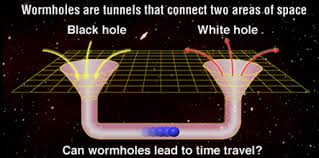 Have We Found The First White Hole? | David Reneke | Space and ...
 Are White Holes Real? - The Nature of Reality — The Nature of ...

Multiverse of propogating universes
www.davidreneke.com
White
holes appear as part of the vacuum solution to the Einstein field
equations describing a Schwarzschild wormhole. One end of this type of
wormhole is a ..
www.pbs.org
But
new research suggests that, if a speculative theory called loop quantum
gravity is right, white holes could be real—and we might have already
observed
MAY BE THE TUNNEL SEEN IN N.D.E .EXPERIENCES

Sunlight Damages the Eyes - SkinCancer.org - and suryanamaskar
- Room
- International
- Stay in Touch: Newsletter Sign-up Twitter Facebook
- English: En Español
- Other Languages


 Conjunctival cancers: Once rare, these cancers have been rising rapidly in incidence in recent years, based on NCI data. Research covering 10 percent of the U.S. population showed that incidence among white men especially increased - 295 percent over a 27-year period.
...............
Subscribe to:
Posts (Atom)