Ageing study: Why some people get older three times faster ...
www.ibtimes.co.uk › Science › Health- 7 days ago - Scientists hope to find ways of slowing down the ageing process(istock). Some people get older three times faster than normal, while others appear to have ... Poulton said: "As we expected, those who were biologically older at age 38 also .... Israeli rights group B'Tselem accuses Colonel Yisrael Shomer of ...
Some people age three times faster than others | ISRAEL21c
www.israel21c.org/.../some-people-age-three-times-faster-than-others/- 7 days ago - Groundbreaking international study reveals that young adults age at ... can measure it,” said study co-author Salomon Israel, a researcher and ...
Study finds dramatic differences in the way we age - Daily Mail
www.dailymail.co.uk/sciencetech/.../Have-got-old-time-Study-finds-dramat...Jul 6, 2015 - Has science finally cracked the secret of eternal youth? Study finds some people can halt - and even REVERSE - the ageing ... of youth, say the team from universities in Britain, the US, Israel and New Zealand. ... Professor Belsky said: 'As we get older, our risk grows for all kinds of different diseases. Science Confirms That People Age at Dramatically Different ...
https://www.yahoo.com/.../science-confirms-that-people-age-at-dramatic...
6 days ago - Ever suspect that you're secretly younger (or older) than someone your ... For the current research, scientists from the United States, United Kingdom, Israel, and New ... who had older biological ages at age 38 seemed to be aging faster ... than others, the researchers are now looking into it, says lead study ...
Some people age three times faster than others

global warming pause
Ocean 'weather balloons' detect cause of global warming pause
That finding, which was published recently in the journal Science, is the latest paper to take on the controversial topic of the global warming pause, or hiatus. Last month, researchers at the National Oceanographic and Atmospheric Administration argued that the slowdown never occurred.
In the JPL study, climate scientists Veronica Nieves, Josh Willis and William Patzert pored over sea temperature data dating back two decades.
A large portion of this information was collected by the Argo array -- a network of more than 3,000 automated sea probes that can dive deeper than a mile, take temperature and salinity readings, then return to the surface where they transmit the information to orbiting satellites.
"They're the oceans' weather balloons," Willis said of the devices.
What researchers discovered was that during the period of the hiatus -- from roughly 2003 to 2013 -- sea surface temperatures in the Pacific and Indian oceans rose more slowly than they had in previous years.
However, heat was actually accumulating in a layer of water just below the surface, in an area between 300 and 1,000 feet deep.
This layer of warming showed that even though the rise in global average surface temperature had slowed, the ocean continued to absorb heat generated by greenhouse gasses, authors said.
"Basically what happened is the heat missing from the surface went to a subsurface layer in the Pacific and Indian oceans," said Nieves, the lead study author.
The precise mechanism by which the oceans trapped heat in this middle layer of water remains unclear, but researchers say it occurs on a decadal timescale.
Patzert said that this subsurface heating gradually "piled up" in the western Pacific Ocean, then "leaked" into the Indian Ocean.
The idea that the Pacific Ocean absorbed heat that would have otherwise led to a rise in global average surface temperature is not new.
However, the JPL study is the first to use only direct observations to describe the phenomenon and specify a precise area of warming.
Lead author Nieves said that previous studies have relied on model-based data, or a combination of models and observations, to frame their conclusions.
"This can lead to completely different results," Nieves said.
Welcome to the age of digital amnesia
0Researchers have been saying for a long time now that as we start storing more and more information on reserve storage on devices, we are actually encouraging our minds to erase them.
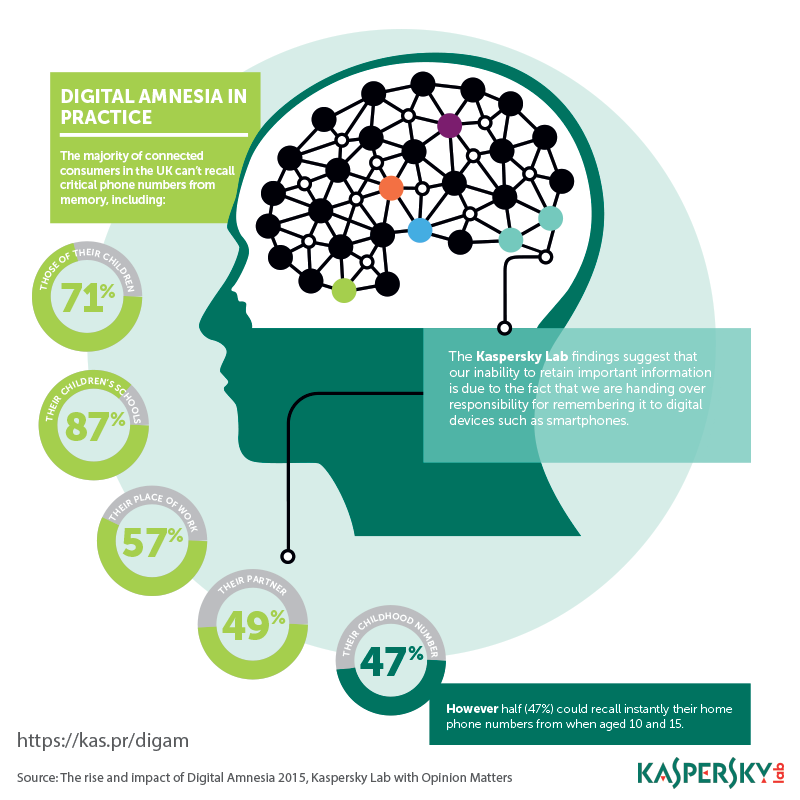
The survey found that more than half of the adult European participants could not recall their children’s or their office phone numbers without looking into their mobile phones. Around a third were not able to remember their partner’s number.
Further, the survey results also showed that 91 per cent of Americans surveyed admitted their dependency on the Internet and devices as a tool for remembering and as an extension of their brain. Similarly, 79.5 per cent of the Europeans surveyed, admit using the Internet as a universal reference book.
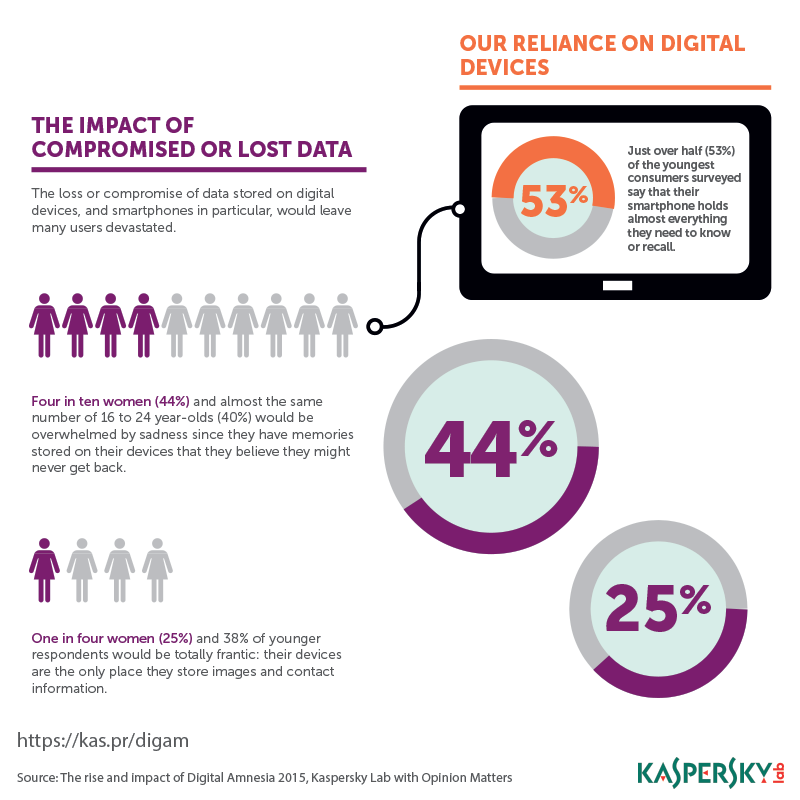
All the information that we previously had to memorize or look for elsewhere is now stored just a few clicks away. At the same time it’s not the question of convenience only, but of necessity as well: 61 per cent of European respondents say they need answers quickly and simply don’t have enough time for libraries or books.
The fact that we are relying too much on smartphones and other mobile devices for our information needs, any loss of data becomes a reason for lot of stress. Some of the primary reasons for data loss from phones is inadequate security, the survey found.
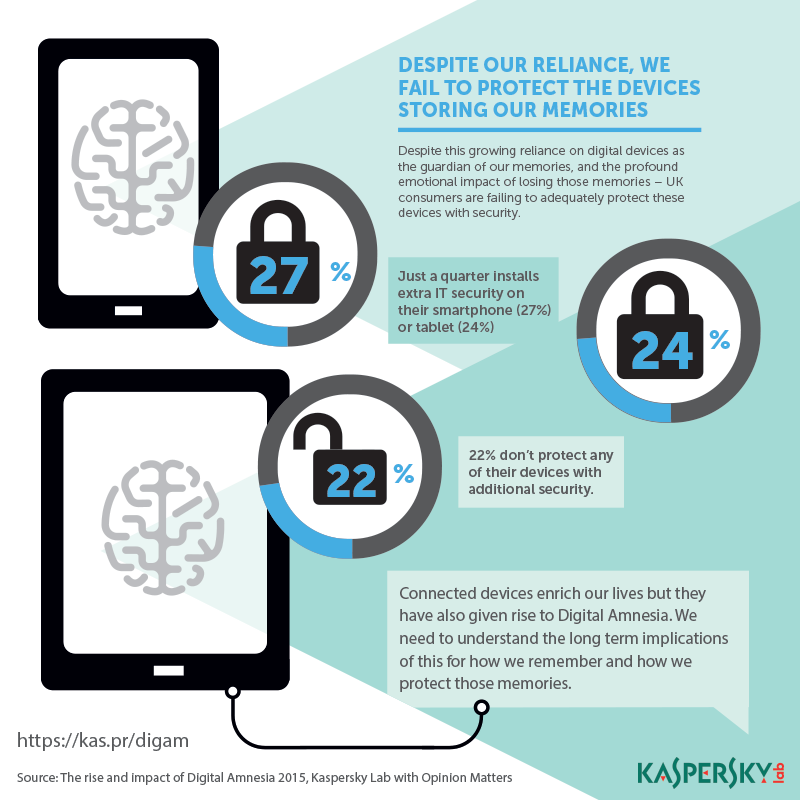
The survey found that Americans are failing to protect these vital devices despite having readily available solutions. In fact 28 per cent of surveyed in America noted that they do not protect ANY of their devices while just one in three installs extra security on their smartphone (30.5 per cent) and just one in five does so on their tablet (20.5 per cent).
Similarly over 25 per cent of women surveyed in both regions as well as over 34 per cent of younger respondents globally say they would panic if they lost their devices. As these devices are the only place they store photos, messages and contact information.
Subscribe to:
Posts (Atom)