In February, SpaceX founder Elon Musk sent a cherry- red Tesla convertible to space. The driver was a dummy in a SpaceX space suit while the car blasts David Bowie’s ‘Space Oddity’ from its speakers. The car’s destination is the red planet.
Apr 10, 2018 - A British family renovating their new property on the Channel Island of Guernsey were shocked when they found a classic car buried in the yard ...
Dec 22, 2017 - A local legend. A '57 classic car buried for 50 years in Tulsa, Oklahoma, a time capsule beneath the courthouse lawn. Now with the fanfare over ...
Miss Belvedere is a 1957 Plymouth Belvedere that was sealed in an underground vault on the grounds of the Tulsa city courthouse on June 15, 1957 as a 50-year time capsule. The car, a desert gold and sand dune white two-tone sport coupe which .... Items buried with the vehicle in a sealed steel container emerged unscathed ...
Feb 17, 2018 - He fully restored the buried Ferrari and often enters the car into car shows. Here are the pictures of the car after the complete restoration.
The car had been hastily wrapped in towels and rags to preserve it, suggesting whoever buried it had intended to return for it. But why bury it in the first place?
Apr 12, 2018 - Nobody is exactly sure why the car was buried there, or even when it was buried, but the considerable state of the car's decomposition ...
Feb 1, 2018 - Scientific American is the essential guide to the most awe-inspiring advances in ... crater with a durable surrogate material such as metal, plastic or glass cement. ... London, and his colleagues discovered a new way to do exactly this in mice. ... And that acidity degrades enamel—the tooth's hard outer layer.
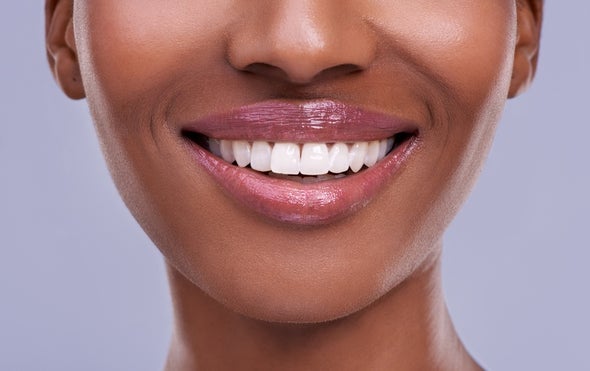
Instead of Filling Cavities, Dentists May Soon Regenerate Teeth
Researchers
recently discovered certain drugs, including one developed to treat
Alzheimer’s, stimulate innate self-repair mechanisms
Credit: Getty ImagesAdvertisement
For dentists, a cavity is a
conundrum—in order to save the tooth they must further damage it.
Currently, the primary way to treat a cavity is to excavate the decay
and the surrounding area before filling the resulting crater with a
durable surrogate material such as metal, plastic or glass cement.
But what if instead of drilling holes into teeth and patching them up
with synthetic fillers, dentists could coax our pearly whites to regrow
themselves? Recently, Paul Sharpe, a bioengineer at King’s College
London, and his colleagues discovered a new way to do exactly this in
mice. Last year they published a study describing their innovative techniques in Scientific Reports.
And since then they have made even more progress that edges this
experimental procedure closer to human clinical trials. If the treatment
eventually becomes part of the dentist’s standard tool kit, scientists
say it would easily be one of the field’s most important advances in 50
years.
Our teeth get damaged all the time. Most of the injuries they endure
are due to everyday wear and tear as well as the activity of microbes in
the mouth. These organisms coat the surface of each tooth and feed on
meal remnants. As they break down particles of food, some of these
microbes produce and secrete acids as a by-product. And that acidity
degrades enamel—the tooth’s hard outer layer.
Advertisement
Like skin, teeth can usually repair minor mishaps themselves. When
our teeth remain uncleaned for too long, however, acid can eat through
the enamel and begin dissolving underlying layers of dense, bony tissue
called dentin. When dentin is seriously injured, stem cells located in
the tooth's soft, innermost layer—the dental pulp—morph into cells
called odontoblasts, which secrete new tissue. (Stem cells are capable
of becoming virtually any type of cell.) Yet when the injury is too
large or deep, that fresh dentin is not sufficient to restore the tooth.
The result is often a cavity.
Sharpe suspected he could dramatically boost teeth’s natural healing
ability by mobilizing stem cells in the dental pulp. Earlier research
had demonstrated the Wnt signaling pathway—a
particular cascade of molecules involved in cell-to-cell
communication—is essential for tissue repair and stem cell development
in many parts of the body such as the skin, intestines and brain. Sharpe
wondered: Could this signaling pathway also be important for
self-repair processes in teeth? If so, maybe exposing damaged teeth to
drugs that stimulate Wnt signaling would similarly encourage the
activity of stem cells in the dental pulp—giving teeth the kind of
regenerative superpowers usually seen only in plants, salamanders and
starfish.
To test this idea, Sharpe and his fellow researchers drilled holes
into the molars of mice, mimicking cavities. They then soaked tiny
collagen sponges (which are made from the same protein found in dentin)
in various drugs known to stimulate Wnt signaling, including tideglusib,
a compound that has been investigated in clinical trials for its
potential to treat Alzheimer's and other neurological disorders. The
scientists then placed these drug-soaked sponges in the drilled mouse
molars, sealed them up and left them for four to six weeks. The teeth
treated with these drugs produced significantly more dentin than ones
untreated or stuffed with an unsoaked sponge or typical dental fillers.
In most cases the technique restored the rodents’ pearly whites to their
former intact state. “It was essentially a complete repair,” Sharpe
says. “You can barely see the joint where the old and new dentin meet.
This could eventually be the first routine pharmaceutical treatment in
dentistry.”
David Mooney, a professor or bioengineering at Harvard University who
has also investigated new ways to heal teeth but was not involved in
the study, says he is “very impressed” by these findings. “This is not
just scientifically important, but has significant practical
advantages," he says. Adam Celiz, an assistant professor of
bioengineering at Imperial College London who was also not involved in
the recent research, says this is an important advance in the emerging
field of regenerative dentistry. “The materials dentists use could soon
be revolutionized,” he says.
Any treatment that recruits the body's native stem cells or adds new
stems cells to the body, however, poses a risk of uncontrolled tissue
growth. Experimental and unregulated stem cell therapies have resulted
in brain tumors, for example, as well as bones growing in eyelids.
But in this case, Sharpe says, the amounts of drug used are so tiny
that the risk of unwanted growth is minimal. Celiz agrees the danger is
small but he says rigorous testing in lab animals and clinical trials
should be done to rule out potential side effects.
The enamel for the cavity is of the same material as artificial teeth, and is formed ... A represents a frame to support the working parts ; B is a shaft which is placed ...
Scientific American is the essential guide to the most awe-inspiring ... of Cabrillo College in Aptos, Calif., provided the following material: ... The accelerated growth of enamel crystals within the demineralized lesion ... through the stomach and intestine into the bloodstream--helps to strengthen teeth while they are growing.
6.3.4 Toughening mechanisms of hydroxyapatite-metal composites. 86 .... network composites mimicking the microstructural features of dental enamel was successfully fulfilled in this ...... Cambridge University Press, Cambridge,. 37-61.
Mar 21, 2017 - Inspired by the example of tooth enamel, which has evolved to endure a lifetime of ... of hard and soft materials represent a new approach to the design of light, ... To support the columns and complete the composite, the group ...
Does
dark matter have an electric charge? No one's really wondered before,
but researchers are exploring the possibility that some dark matter
particles have a ...