10 biggest features of Google's next version of Android OS

Android Pie: 10 biggest features of Google's next version of Android OS
Gadgets Now | | Aug 7, 2018, 07.58 AM IST
Android Pie: 10 biggest features of Google's next version of Android OS
1 / 11

Android Pie: 10 biggest features of Google's next version of Android OS

It’s official, the next big version of Android OS is Android Pie. Google gave a preview of the upcoming version of the world’s most-popular mobile OS, then dubbed Android P, earlier this year. The new OS version is on its way now and is available on Pixel phones. The other device users who signed the company’s Beta program will receive the update later this year.
Here’s everything new in the Android Pie.
Support for Apple iPhone X-like notch on the display
2 / 11

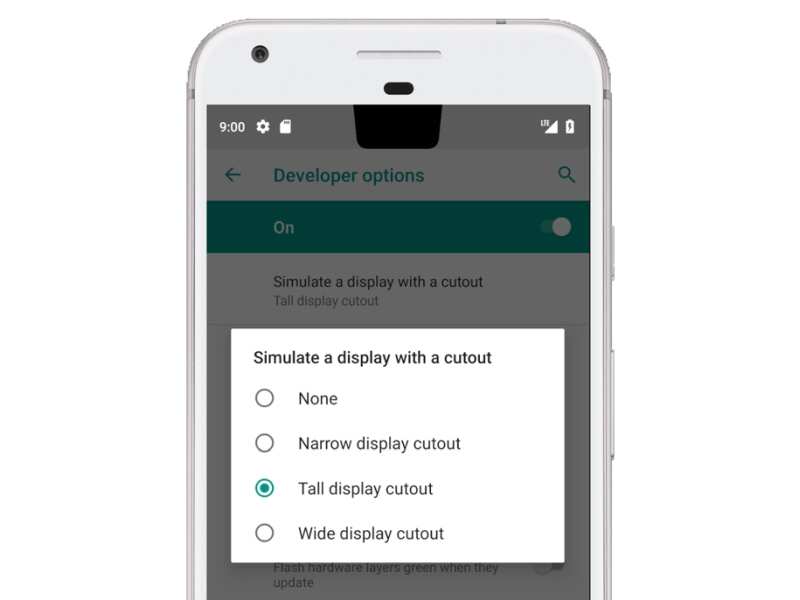
Support for Apple iPhone X-like notch on the display

Yes, Google is following Apple. The Android P Developer Preview 1 comes with the ‘Display Cutout’ support. The particular section in the official Android P blog post says that the new OS version will support full screen smartphones with a dedicated space for speakers and the front cameras, something that sounds a lot like what we’ve seen with the iPhone X.
Gmail-like 'Smart Replies' coming to messages
3 / 11

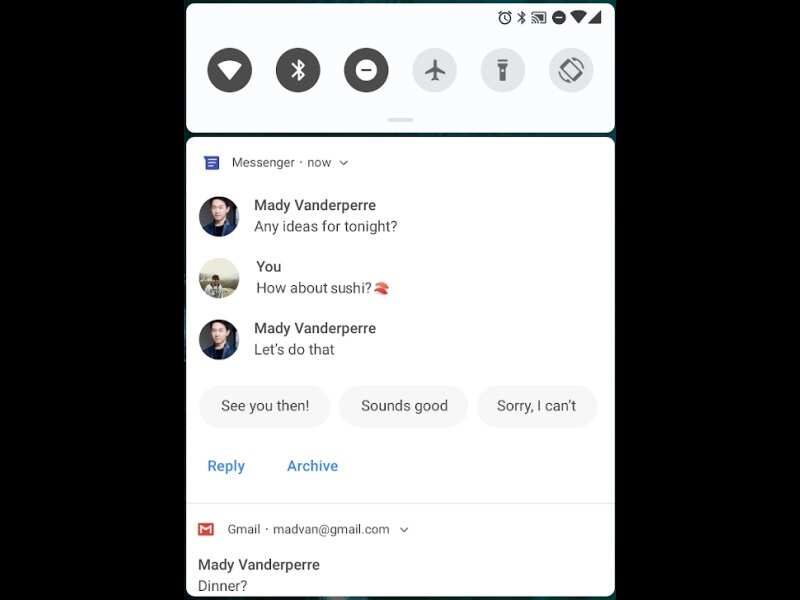
Gmail-like 'Smart Replies' coming to messages

It's been awhile since Google unveiled its ‘Smart Reply’ to Inbox, Gmail and Allo platforms. These are automated responses that show up as a reply to mails or a chat, using machine learning algorithm. These have now come to messages. These will save the time to type a message.
Ability to see images in message notifications
4 / 11

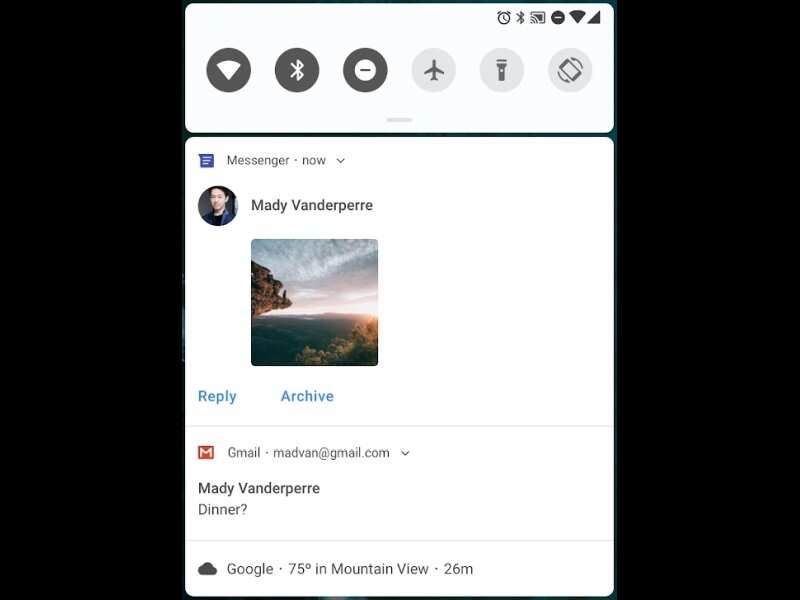
Ability to see images in message notifications

Users will be able to see images in the message notification by swiping down the tray from the top of the screen, something which was not possible until now. For now, users have to open the notification to see the attachment.
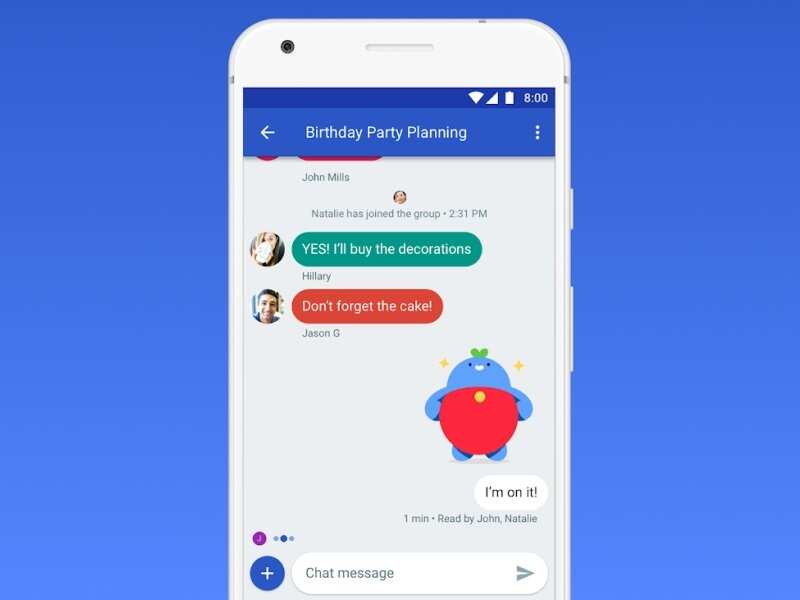
Will allow users to differentiate between single and group conversations
5 / 11

Will allow users to differentiate between single and group conversations

Post Android P, Android users will also be able to see which text message is one-to-one or is in a group from inside the notification tray. This is supposed to give more clarity to users right from the notifications area and save them extra taps.
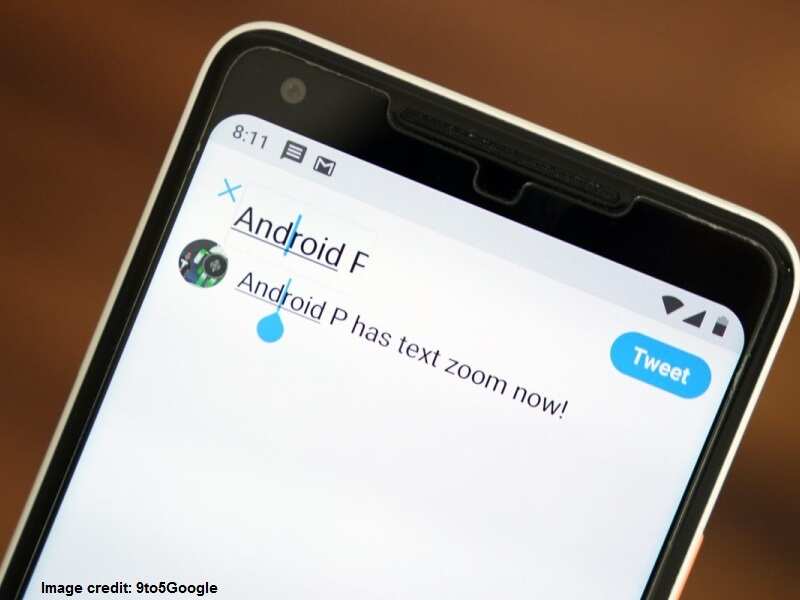
Apple iPhone-like text zooming tool
6 / 11

Apple iPhone-like text zooming tool

This is one of the hidden features that is not mentioned in the official blog. This iPhone-like feature gives users a clearer look at what they are typing by giving a magnified look when the user swipes the cursor on the sentence or a phrase.
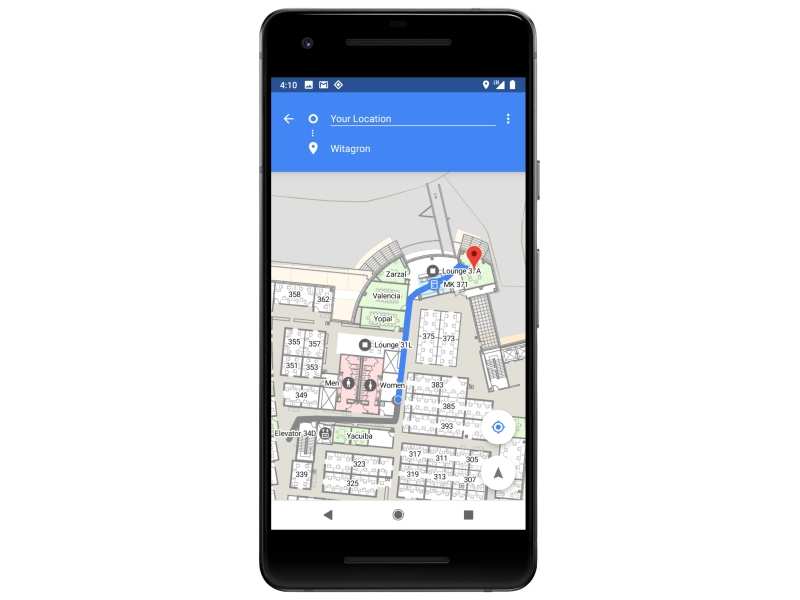
Support for new Wi-Fi protocol
7 / 11

Support for new Wi-Fi protocol

Android P will bring along the support for the IEEE 802.11mc Wi-Fi protocol, which is also known as Wi-Fi___33 Round-Trip-Time (RTT). This is supposed to let developers take advantage of indoor positioning in apps. For end users, this means they may be able to see indoor maps right from inside the apps.
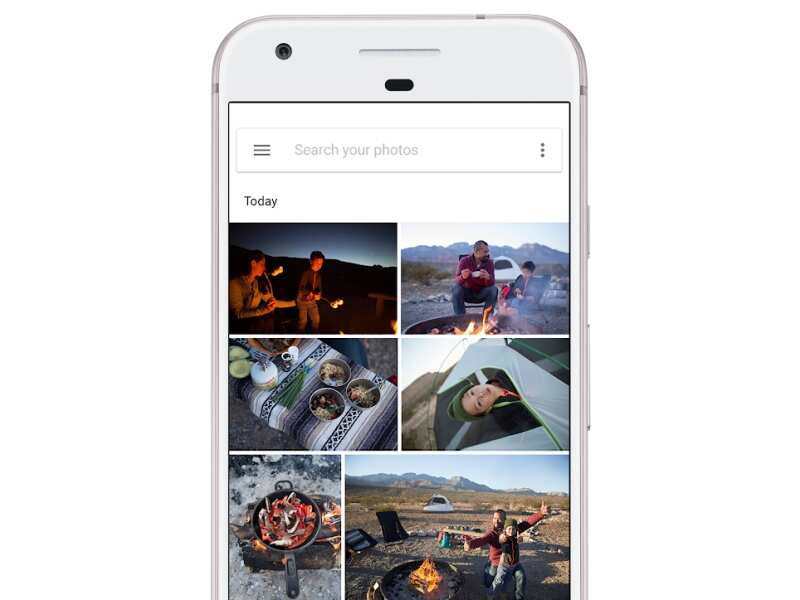
New image compression technology, same as in Apple iOS11
8 / 11

New image compression technology, same as in Apple iOS11

With Android P, images will save more data while transferring and save more space on the handset as well. This will be due to Android P’s support for HEIF (heic) image encoding, something Apple has adopted already.
Multiple camera support for third-party apps
9 / 11

Multiple camera support for third-party apps

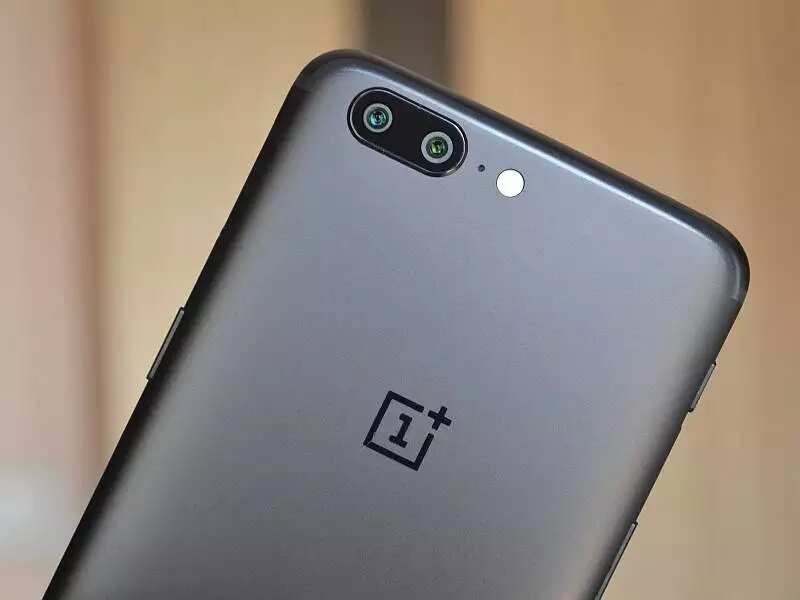
Android P will embrace the dual-camera setup, which is there in every other flagship and even mid-range smartphones these days. Developers can make their apps support multiple cameras now.

Improved password autofill
10 / 11

Improved password autofill

Password autofill was already there in Android but with Android P it is supposed to get better. The feature prevents users to type in each section while filling up online forms, passwords and more.
Settings redesign with vertical volume slider
11 / 11

Settings redesign with vertical volume slider

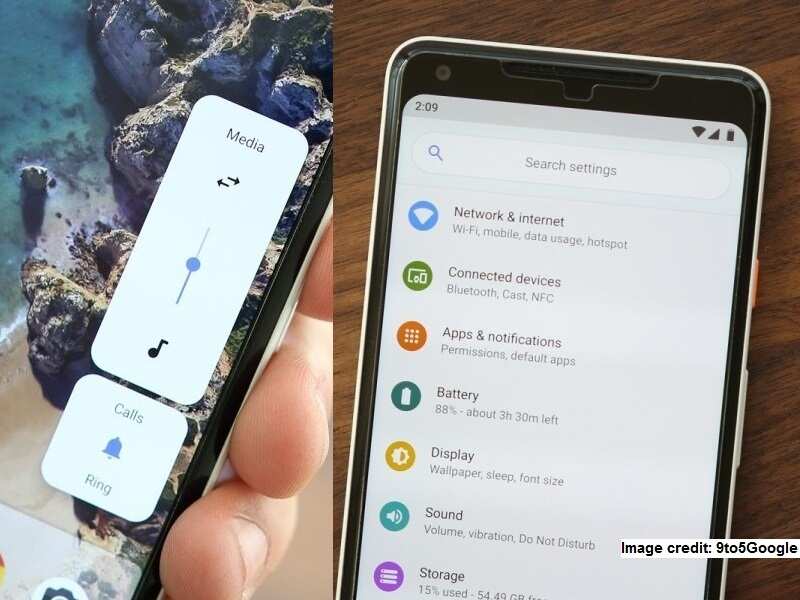
With Android P, the Settings page gets a cosmetic change. The White/Blue colour palettes are now multi-coloured, which many will find as a refreshing change. The volume slider is now also placed vertically instead of horizontally as seen until now. Its placement has also been changed from top to side.
 
 Image result for mr pichai


GOOGLE busy with digital.

Android Pie: 10 biggest features of Google's next version of Android OS

It's official, the next big version of Android OS is Android Pie. Google gave a preview of the upcoming version of the world's most-popular mobile OS, then ...
Gadgets Now

Google Android Pie: Machine Learning to Digital Wellbeing, here are top features

Android P aka Android Pie is rolling out Google Pixel phones from today. Here are the top features of Google’s new iteration of its Android operating system.

tech Updated: Aug 07, 2018 17:53 IST
Kul Bhushan
Kul Bhushan
Hindustan Times
Android Pie,Android P,Google
Say hello to Android Pie.(Google)
Android Pie, Google’s latest iteration of its mobile operating system, is finally here. Beta versions of the software had been available to select handset users for quite some time in the guise of Android P.
Android Pie version 9.0 succeeds the Android Oreo (v8.X), and the changes it brings along mainly focus on inserting smarter utility features in the native operating system instead of relying on third-party solutions.
Machine learning
With Artificial Intelligence (AI) and Machine Learning (ML) becoming hot buzzwords in the technology space, Google’s Android Pie joins the bandwagon with features that are “built to learn from users”.
For instance, Adaptive Brightness understands how a user likes the brightness settings of the phone and keeps it that way. The native solution solves the problem of manually adjusting brightness levels for different ambient light conditions.
Adaptive Battery is a similar technology as it understands which apps you use the most and optimises them accordingly. App Actions predicts which app you will use next, based on your usage.
“If it’s Tuesday morning and you’re preparing for your commute, you’ll be presented with suggestions such as navigating to work on Google Maps or resuming an audiobook with Google Play Books. And when you put on headphones after work, you may see options to call your mom or launch your favourite Spotify playlist,” Google explains.
New interfaceAndroid Pie’s new system navigation does away with the traditional three-touch button navigation system for a one-touch kind. The singular button seems highly inspired by Apple’s iPhone X gesture features. For instance, you can swipe up the button to see recent applications. The thumbnails of recent applications now appear larger with a full-screen view. Smart Text Selection has also been improved and integrated within the “Overview” of recent applications.
One of the key interface changes include a revamped Quick Settings that focuses on giving prominence to more useful tools. Other improvements include a simplified process of taking and editing screenshots, better volume controls and notifications management.
Android Pie brings a new interface and machine learning-based features (Google)
Digital Wellbeing
At the company’s I/O conference earlier this year, Google CEO Sundar Pichai had talked at length about helping users curb smartphone addiction. Under a “Digital Wellbeing” initiative, Google has already rolled out updates to its core apps like YouTube — allowing users to set a time limit on how much time they should spend on the application.
Android Pie brings an elaborate dashboard to the native operating system that enables users to keep an eye on how much time they’re spending on their devices. There’s also an App Timer that sets time limits on apps and has a visual grey icon on apps to denote that their time is up. The Do Not Disturb function now is much more intuitive, and has the ability to disable all visual notifications on the phone.
Want to completely detach yourself from the screen? The Wind Down application enables Night Light and Do Not Disturb, and transitions the screen into grayscale before bedtime.Here’s how to check how much time you spend on Facebook, Instagram
Here’s how Google is helping you curb smartphone addiction (Google)
Privacy and Security
Android’s recent versions have extensively focused on privacy and security of users, and Android Pie is no exception. The latest Google mobile OS features “industry-leading hardware security capabilities to allow protecting sensitive data like credit card information using a secure, dedicated chip,” according to Google.
“Android 9 also brings important privacy improvements, such as TLS by default and DNS over TLS to help protect all web communications and keep them private,” it added.
Compatible phones
As per the tradition, Google Android Pie is coming to Pixel phones first. Non-Google phones from Sony Mobile, Xiaomi, HMD Global, Oppo, Vivo, OnePlus, and Essential, that were part of Android P Beta programme will receive the update by end of this year. Android One phones like Xiaomi Mi A2 and Mi A1 will also be receiving the update later this year.

This ‘cheap’ Indian project 😉😅can


Videos


Image result for DONT COUNT YOUR CHICKENS

This ‘cheap’ Indian project 😉😅can power the world for 250 years, return trillions!

India’s space program wants to go where no nation has gone before -– to the south side of the moon. And once it gets there, it will study the potential for mining a source of waste-free nuclear energy that could be worth trillions of dollars.

By: | Published: June 27, 2018 12:06 PM
931
Shares
isro, chandrayaan, chandrayaan 2, isro chandrayaan, nuclear energy, NASA, space station, Elon Musk, india, china, science The mission would solidify India’s place among the fleet of explorers racing to the moon, Mars and beyond for scientific, commercial or military gains.
India’s space program wants to go where no nation has gone before -– to the south side of the moon. And once it gets there, it will study the potential for mining a source of waste-free nuclear energy that could be worth trillions of dollars.
The nation’s equivalent of NASA will launch a rover in October to explore virgin territory on the lunar surface and analyze crust samples for signs of water and helium-3. That isotope is limited on Earth yet so abundant on the moon that it theoretically could meet global energy demands for 250 years if harnessed.
“The countries which have the capacity to bring that source from the moon to Earth will dictate the process,’’ said K. Sivan, chairman of the Indian Space Research Organisation. “I don’t want to be just a part of them, I want to lead them.’’
The mission would solidify India’s place among the fleet of explorers racing to the moon, Mars and beyond for scientific, commercial or military gains. The governments of the U.S., China, India, Japan and Russia are competing with startups and billionaires Elon Musk, Jeff Bezos and Richard Branson to launch satellites, robotic landers, astronauts and tourists into the cosmos.
The rover landing is one step in an envisioned series for ISRO that includes putting a space station in orbit and, potentially, an Indian crew on the moon. The government has yet to set a timeframe.
“We are ready and waiting,’’ said Sivan, an aeronautics engineer who joined ISRO in 1982. “We’ve equipped ourselves to take on this particular program.’’
China is the only country to put a lander and rover on the moon this century with its Chang’e 3 mission in 2013. The nation plans to return later this year by sending a probe to the unexplored far side.
In the U.S., President Donald Trump signed a directive calling for astronauts to return to the moon, and NASA’s proposed $19 billion budget this fiscal year calls for launching a lunar orbiter by the early 2020s.
ISRO’s estimated budget is less than a 10th of that – about $1.7 billion – but accomplishing feats on the cheap has been a hallmark of the agency since the 1960s. The upcoming mission will cost about $125 million – or less than a quarter of Snap Inc. co-founder Evan Spiegel’s compensation last year, the highest for an executive of a publicly traded company, according to the Bloomberg Pay Index.
This won’t be India’s first moon mission. The Chandrayaan-1 craft, launched in October 2008, completed more than 3,400 orbits and ejected a probe that discovered molecules of water in the surface for the first time.
The upcoming launch of Chandrayaan-2 includes an orbiter, lander and a rectangular rover. The six-wheeled vehicle, powered by solar energy, will collect information for at least 14 days and cover an area with a 400-meter radius.
The rover will send images to the lander, and the lander will transmit those back to ISRO for analysis.
A primary objective, though, is to search for deposits of helium-3. Solar winds have bombarded the moon with immense quantities of helium-3 because it’s not protected by a magnetic field like Earth is.
The presence of helium-3 was confirmed in moon samples returned by the Apollo missions, and Apollo 17 astronaut Harrison Schmitt, a geologist who walked on the moon in December 1972, is an avid proponent of mining helium-3.
“It is thought that this isotope could provide safer nuclear energy in a fusion reactor, since it is not radioactive and would not produce dangerous waste products,’’ the European Space Agency said.
There are an estimated 1 million metric tons of helium-3 embedded in the moon, though only about a quarter of that realistically could be brought to Earth, said Gerald Kulcinski, director of the Fusion Technology Institute at the University of Wisconsin-Madison and a former member of the NASA Advisory Council.
That’s still enough to meet the world’s current energy demands for at least two, and possibly as many as five, centuries, Kulcinski said. He estimated helium-3’s value at about $5 billion a ton, meaning 250,000 tons would be worth in the trillions of dollars.
To be sure, there are numerous obstacles to overcome before the material can be used – including the logistics of collection and delivery back to Earth and building fusion power plants to convert the material into energy. Those costs would be stratospheric.
“If that can be cracked, India should be a part of that effort,’’ said Lydia Powell, who runs the Centre for Resources Management at the New Delhi-based Observer Research Foundation think tank. “If the cost makes sense, it will become a game-changer, no doubt about it.’’
Plus, it won’t be easy to mine the moon. Only the U.S. and Luxembourg have passed legislation allowing commercial entities to hold onto what they have mined from space, said David Todd, head of space content at Northampton, England-based Seradata Ltd. There isn’t any international treaty on the issue.
“Eventually, it will be like fishing in the sea in international waters,’’ Todd said. “While a nation-state cannot hold international waters, the fish become the property of its fishermen once fished.’’
India’s government is reacting to the influx of commercial firms in space by drafting legislation to regulate satellite launches, company registrations and liability, said GV Anand Bhushan, a Chennai-based partner at the Shardul Amarchand Mangaldas & Co. law firm. It doesn’t cover moon mining.
Yet the nation’s only spaceman isn’t fully on board with turning the moon into a place of business.
Rakesh Sharma, who spent almost eight days aboard a Russian spacecraft in 1984, said nations and private enterprises instead should work together to develop human colonies elsewhere as Earth runs out of resources and faces potential catastrophes such as asteroid strikes.
“You can’t go to the moon and draw boundaries,’’ Sharma said. “I want India to show that we’re capable of utilizing space technology for the good of people.’’