Want
to figure out if a technology innovation is a game changer? Often you
need look no further than how we talk about it. In particular, look for
terms that convey an absence of something.
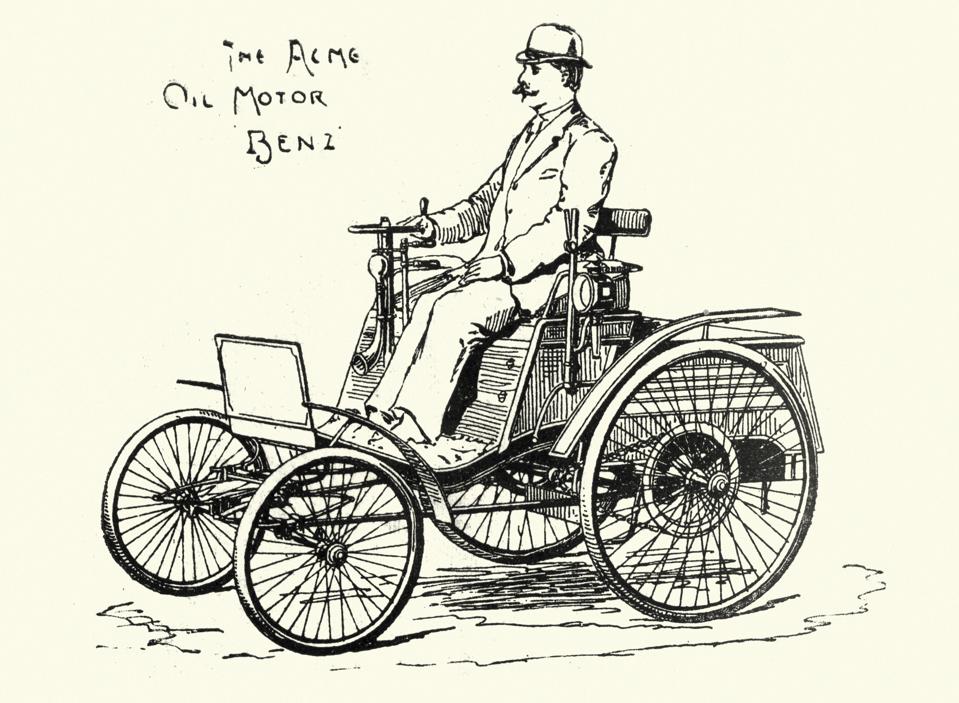
Words of negation early in the life of an innovation suggest that it is radically different than what’s come before. The first automobiles were called “horseless carriages.” Not long
after came radio, or “the wireless”—music and speech in your home, from a
box with no wires! That term of negation was revived in the early days
of mobile for “wireless phones” before phones were “smart.”
Words of negation early in the life
of an innovation suggest that it is radically different than what’s come
before. The first automobiles were called “horseless carriages.”
Creating a description from negation says something important—that the
innovation is so different from what we know that we can only describe
it by what it’s missing.
GettyAs I wrote elsewhere,
creating a description from negation says something important—that the
innovation is so different from what we know that we can only describe
it by what it’s missing. It’s only as we become familiar with a new
innovation that we begin to develop a more extensive and descriptive
lexicon for it. By focusing only on a feature that’s being left behind (sorry,
horse), the language of negation suggests the most dramatic of changes.
This is special to me because today’s most important technological
innovation, cloud computing, is rich in negation language. “Cloud” itself suggests that all the computing infrastructure has
disappeared into thin air. That’s odd, when you consider that building
out clouds is one of history’s larger infrastructure projects, involving
hundreds of billions of dollars in cloud computer servers, trenched and
undersea cables, and facilities around the world. Salesforce, an early company in the cloud, tried to negate the idea of software by using a logo
composed of the word “software” with a big line through it. This
presumably referred to physical instances of packaged software, which
was transitioning to a model of renting software as an online service.
The company currently has a market capitalization of $165 billion,
largely based on software.
Salesforce, an early company in the
cloud, tried to negate the idea of software by using a logo composed of
the word “software” with a big line through it.
GettyCloud computer servers spin up “virtual machines,” as if the extra work the servers gain by doing the work of two or more operating systems has no physical basis. Google App Engine,
launched in 2008, made it possible to deploy and operate programs
without provisioning and patching. This was the basis for what we now
call “serverless computing,” a more comprehensive automated deployment in Google Cloud Functions or AWS Lambda. Servers are still very much there, it’s just that customers don’t have to provision and maintain them. Then there’s “NoOps,” first posited in 2011
by Forrester Research. It means that much of the operational work done
to keep computers going is also automated, or taken over by cloud
computing companies. In fact, operations people have tweaked their
roles, taking over more business-oriented jobs like monitoring the net
spend on tech. A more recent example is “no-code development,” or deploying programs
to the cloud without seeming to code software. This is done by
AppSheet, a company acquired by Google last month. As this AppSheet video
shows, using this technology, it’s possible to turn items on a
spreadsheet into dynamic elements of a shared mobile app, adding images
and information that’s reflected in both the mobile app and the
spreadsheet.
Yes, it’s possible to create a software application without knowing
any software language. Does this mean there’s no code? On one level,
yes. Formerly unqualified people are creating software. On another, no.
There is a lot of complex software coding going on behind the scenes to
make the act of coding possible for ordinary mortals. That is the very big thought behind the “no-code” name: Now millions
more people, anyone who can operate a spreadsheet, are potential coders.
That suggests an explosion of enterprise software and attendant data,
which is most likely to grow in instances and sophistication. When this has happened before in the consumer world, it’s been a very big deal. The ease with which information can be added to online maps
greatly increased their utility, building up businesses like online
reservations, food delivery, and travel. Even more popular, easy-to-use blogging tools first created a publishing revolution, then inspired services like Twitter and Instagram. Imagine something like that coming to enterprise software. “No-code”
may sound like nothing, but, like all the other negations, it’s really
something. Get more perspective on the future of cloud computing, and what it means for businesses.
March 30, 2020 - The FDA has authorized a coronavirus test that the manufacturer says can tell if someone is infected with the virus within 5 minutes.
The test is meant to be used in places like a doctor's
office, emergency room, or urgent care center. The test will provide
results through a platform currently used by many of those locations for
tests like flu and strep, instead of sending the throat or nasal swab
to a lab for analysis.
The FDA's emergency use authorization (EUA), issued on
Friday, does not mean that the FDA has approved the test, but that it is
allowing its use because of the coronavirus outbreak.
In a news release,
Abbott Diagnostics Scarborough in Illinois said the test can tell if a
person has the coronavirus in as little as 5 minutes and tell if someone
doesn't have the virus in 13 minutes.
A shortage of tests has hindered efforts to contain the
virus in the U.S, which leads the world with more than 100,000 cases of
COVID-19. Testing has been focused on priority groups, such as
hospitalized patients and health care professionals with symptoms,
according to CDC guidelines.
Abbott said it will make the tests available to health care
providers next week and work with the government to send the tests to
areas where they're most needed.
5 days ago - Most 3D printers today are best suited to making plastic parts, not cloth or filters used in face masks. Based in Redwood City, California, Carbon is ...
5 days ago - HP 3D Printed Masks for COVID-19 response; Designed by research institute CIIRC CVUT ... A single print can produce 300 test swabs at a time enabling ... frequently reviewing 3Dprinters and sharing his technical expertise.
Mar 20, 2020 - Manufacturers such as Vauxhall and Airbus are planning to repurpose their factories and utilize 3D-printing technology to create parts for ventilators to treat patients with the coronavirus. Prime Minister Boris Johnson appealed to companies to help in a “wartime” effort to ...
1 day ago - In one week, the group designed, made, tested, and are now distributing 3D-printed COVID-19 test swabs. Northwell's eight 3D printers are now ...
3 days ago - 3D Printer Crowdsourcing for COVID-19 public spreadsheet; Useful 3D Files; Cad Crowd's 3D Printing Challenge. Update 3/27. As the global 3D ...
3 days ago - The brand's Covid-19 masks consist of a visor that is worn across the forehead and secured behind the ears with elastic. Clear plastic film is ...
5 days ago - HP 3D Printing Covid-19. (Image credit: HP). HP has revealed plans on how it is using its 3D printers and expertise to help fight coronavirus, ...
How 3D printing can affect your broken supply chain during the crisis caused by the Covid-19 outbreak? 3D printing VS coronavirus. Worldwide pandemic ...
3 days ago - The additive manufacturing and 3D printing community has many members keen to assist during the COVID-19 pandemic. This is a summary of ...
3 days ago - 3D printing in support of COVID-19 containment efforts. Producing critical parts to help meet urgent needs. Materials on these pages are being ...
1 day ago - Top 1: COVID-19, how is 3D printing helping the fight? Given the current health crisis, the 3D printing community has mobilized to curb the ...