You
all remember Princess Leia, appearing as a floating image in the early
episodes of Star Wars. Sometime in the 80s, a broader audience was
introduced to the word ‘hologram’.
For years, it seemed like holograms
would be confined to the corner of science fiction forever. However,
very recently, things have begun to change thanks to advances in optical
technology.
What is hologram technology?
In real life, holograms are virtual
three-dimensional images created by the interference of light beams that
reflect real physical objects. Holograms preserve the depth, parallax,
and other properties of the original item. They are great for presenting
complex technical concepts as well as showcasing visually appealing
products.
So, what is a hologram? Simply put,
holograms are three-dimensional images generated by interfering beams of
light that reflect real, physical objects. Unlike conventional 3D
projections, holograms can be seen with the naked eye.
There are two ways to create holograms: via
computer - with augmented reality glasses, and physical - for optical
displays. Depending on which method is used, there are two types of holograms - stereotypical and realistic.
Stereotypical holograms
The most common and recognizable example of a
stereotypical hologram is Microsoft HoloLens. In 2015, Microsoft became
the first company to introduce the HoloLens holographic glasses. The
technology that the tech giant unveiled is widely used today to create augmented reality.
To create holograms for HoloLens, content
creators use HoloStudio software. Users can import models from other
services or create 3D objects themselves with the help of the app. In
short, you can use HoloLens to create complex virtual objects. In turn,
these objects are superimposed on the imagery of the surrounding world
through the use of virtual reality glasses.
The result is an image that appears very
similar to Pokemon Go. The only difference is that in HoloLens, rather
than seeing fantastical dinosaurs, you are deploying a virtual
workspace, an educational office, or a virtual conference with
colleagues.
HoloLens makes this possible by linking AR
objects with traditional computer programs for work and entertainment.
Check out this short demo for more information about holographic technology.
Realistic holograms
In 1947, Dennis Gabor — a Hungarian-British physicist —
developed today’s modern hologram theory while working on an electron
microscope. However, optical holography didn't really advance until the
advent of the laser in 1960. A laser emits a potent burst of light that
only lasts a few nanoseconds.
This makes it possible to obtain holograms
of high-velocity events, such as an arrow or bullet in flight. The first
laser-based human hologram was created in 1967, which paved the way for
numerous other applications of holographic technology.
So, how do holograms work? Holography
is a unique method of photography whereby 3D objects are recorded using
a laser and then restored as precisely as possible to match the
originally recorded object. When illuminated via a laser, holograms are
able to form an exact 3D clone of the object and duplicate its
features.
In order to produce an accurate
visualization of a hologram at a certain point in space, two light waves
must be coordinated in motion - a reference wave and an object wave.
Both are formed by separating the laser beam.
The reference wave is created directly by
the light source, and the object wave is reflected from the recorded
object. There is also a photographic plate on which dark stripes are
"imprinted" depending on the distribution of electromagnetic energy
(interference) in a given place.
A similar process takes place on ordinary
photographic film. However, to reproduce an image from it, a printout on
photographic paper is required. However, during the active use of
hologram technology, everything happens a little differently.
To reproduce a "portrait", the photographic
plate has to be "illuminated" with another light wave in close proximity
to the reference wave, which converts both waves into a new wave of
light that runs alongside the object wave. The result is an almost
entirely accurate reflection of the object itself. For a better
understanding of how holograms are produced, watch this short video.
What are some of the most common industry use cases?
Holographic technology is used in a variety of ways, across several industries. The list below includes some of the most popularized examples:
1. Telecommunications
In 2017, Verizon (USA) and Korea Telecom
(South Korea) made the first holographic call using 5G technology. To
make the call possible, two holograms were formed. Both fully capable of
conveying the user's emotions and gestures.
2. Education
In 2015, the Nobel laureate and professor of
physics at Stanford University, Karl Wieman, spoke at Nanyang
Technological University (Singapore) without leaving the United States.
In 2013, St George's University of London introduced holograms
capable of displaying the working organs of a human body. The
presentation showcased three-dimensional images of kidneys four meters
in length, a skull, and other parts of the body.
3. Spatial navigation
In 2017, scientists from the Munich University of Technology developed a method for obtaining three-dimensional holograms
using a Wi-Fi router. The method described in the study allows for
creating copies of premises by displaying objects around them. This
technology can be used to find and rescue victims trapped under an
avalanche or within collapsed buildings.
4. Marketing and direct sales
Product holograms are a new marketing ploy
to grab the attention of customers. With the help of a hologram, you can
enlarge a 3D copy of a product and make it viewable from all sides.
This is convenient for customers who want to see their desired purchase
in full detail.
In 2017, Barbie presented a holographic
robotic doll that responds to voice commands. The toy was able to
respond to questions about the weather and discuss other topics.
5. Music shows
A hologram of Eric Prydz's face acted as the
closing of his EPIC 5.0 show in London, 2017. The performance of the
popular French DJ was accompanied by an impressive laser show. At the
end of the evening, over 300 lasers formed a volumetric hologram of the
DJ's head. From then on, the DJ’s shows were always accompanied by the use of holograms to create a unique atmosphere.
6. The return of historical figures
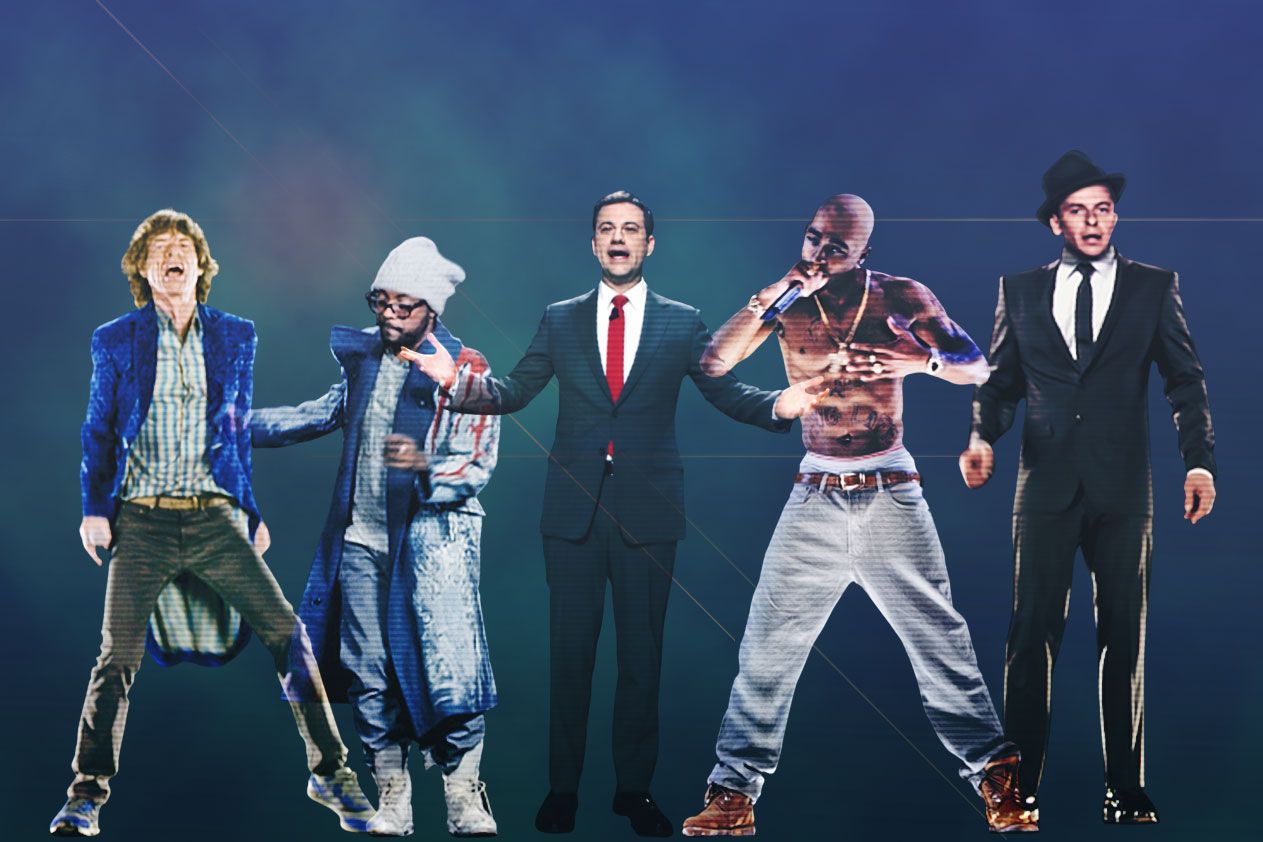
In 2012, Digital Domain studio, specializing in VFX for de-aging Hollywood stars in movies,
brought Tupac Shakur back to life as an exceptional 3D hologram. Using
an actor and body double, they created animations for a lifelike digital
avatar of Tupac. In 2014, Tupac appeared at Coachella in his digital
human form.
As with Tupac or any other educational
project such as creating a virtual history museum, producing holograms
requires additional planning and coordination. First, these holograms are created based on the use of unique digital avatars for individuals who left us a long time ago.
Creating 3D models, animating movements, and
synthesizing authentic voices is no simple task. In the case of the
latter, Respeecher can dramatically reduce the cost and time span
associated with reproducing an authentic voice. In other words, we can
not only bring back Tupac's voice from the past, but it is also possible
to create new authentic content as if the singer were still with us.
Interested in learning more? Here’s how we can help.
The future of holographic technology
The future of holography lies at the intersection of AI, digital human technology, and voice cloning.
The consistent increase in worldwide computing power will allow for the
creation of digital human models that will render at an
ever-accelerating pace that will make them more and more difficult to
tell apart from real ones.
In turn, the evolution of holographic
technologies will lead to their increasing availability and portability.
Imagine if holographic content could one day be as accessible as
streaming content: holographic cinema, holographic theater, music shows.
Augmented reality will no
longer require wearing special glasses but will be directly integrated
into landscape objects. We already know how holographic pedestrian
crossings and holographic advertising work. But we can only imagine how
our cities and lives will be changed as the evolutionary pace of
technology continues to accelerate.
NEXT :-INTEGRATION OF AUGMENTED REALITY HOLOGRAPHY WITH VISUAL AND AUDIOGRAPHY .
ALSO THE VISUAL TALKING HOLOGRAPH WILL HAVE TOUCH SENSITIVITY WHICH IS THE NEXT WHAT WE WILL DO TO ACHIEVE IN SCIENCE RESEARCH
NEXT WILL BE :-
INTEGRATION OF THIS FUTURE TALKING SEEING HOLOGRAM WHICH LOOKS LIKE A REAL HUMAN INCLUDING TOUCH WILL HAVE:- 2 MORE ACHIEVEMENT WHICH WE ALREADY MADE
{- THAT IS
SMELL